Are you considering Botox to smooth out those fine lines and wrinkles but unsure about how much you need? You're not alone! Many people find themselves asking, "How many units of Botox do I need?" Understanding Botox units and how they relate to different treatment areas can empower you to make informed decisions about your aesthetic goals. If you're brand new to the treatment, start with our primer on what Botox is and how it works.
What Does a "Unit" of Botox Mean?
A unit of Botox is a measurement that indicates the dosage of the neurotoxin used in your treatment. Each unit is a standardized amount that can help relax the muscles responsible for creating wrinkles. However, the number of units required can vary significantly depending on several factors, including the treatment area and individual muscle strength.
Key Points:
- Standard Measurement: Units are the standard measure for Botox dosage.
- Individual Variation: The required units can differ from person to person based on muscle strength and treatment goals.
Why Botox Dosage Is Different for Everyone
When exploring Botox units by treatment area, it's essential to recognize that each person's facial structure and muscle activity are unique. Factors that can influence your dosage include:
- Facial Muscle Strength: Stronger muscles may require more units.
- Desired Results: Some people prefer a more natural look while others may want a more dramatic change.
- Age and Skin Type: These elements can also affect how your skin responds to Botox.
This individualized approach is why it's crucial to consult with a qualified provider who can tailor a treatment plan just for you.
Common Treatment Areas
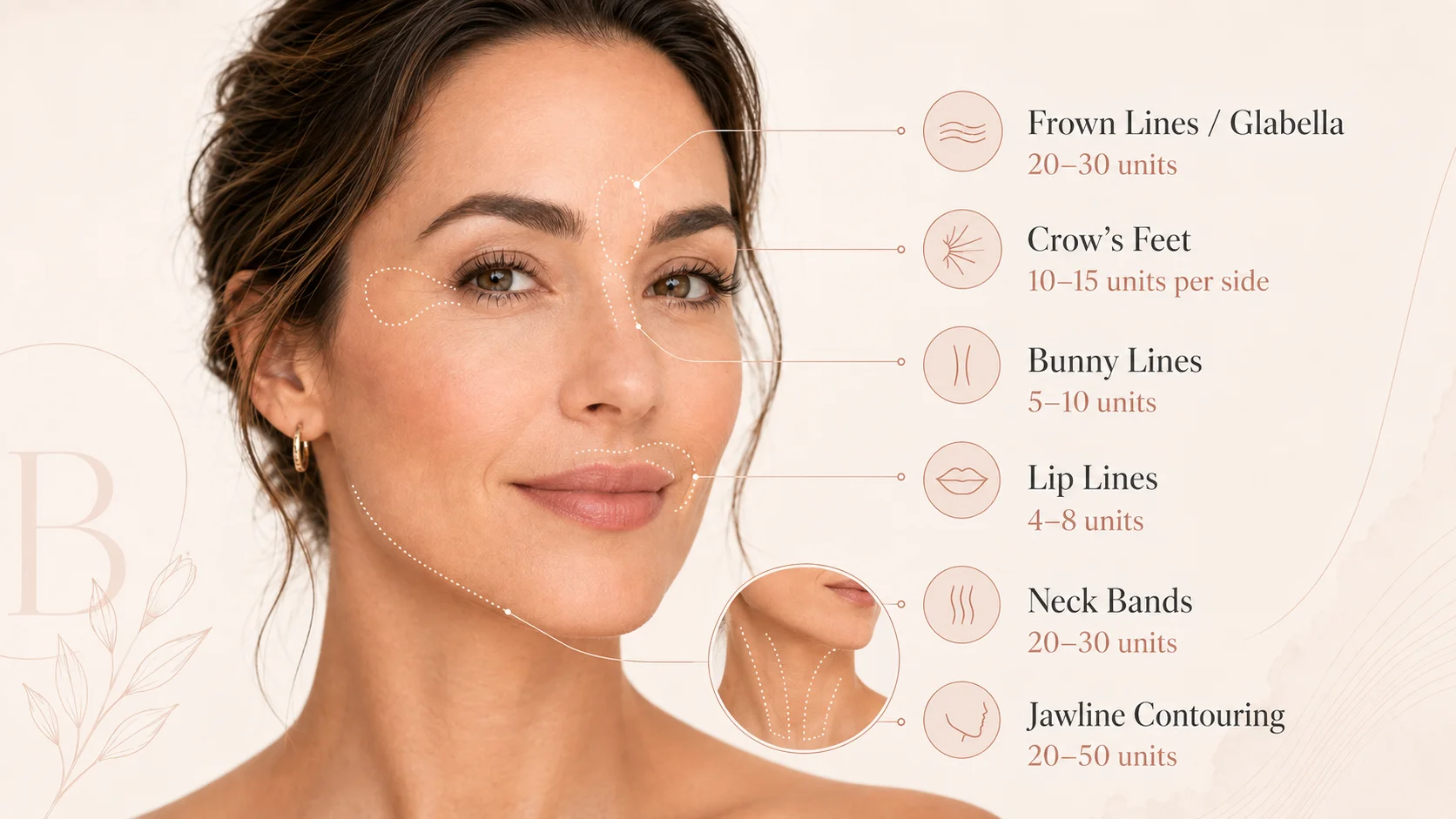
Botox can be used to treat various areas of the face, each requiring different amounts of units. Here's a breakdown of common treatment areas and their typical unit ranges:
Forehead Frown Lines / Glabella
The glabella, or the area between your eyebrows, often shows signs of aging first.
- Typical Units: 20-30 units
- Purpose: Smooths out frown lines and reduces the appearance of anger or stress.
Crow's Feet
Those fine lines that form around the eyes can be effectively treated with Botox.
- Typical Units: 10-15 units per side
- Purpose: Softens the appearance of crow's feet, giving a more youthful look.
Other Areas Alpenglow Actually Treats
In addition to the common areas mentioned, Botox can also be used for:
- Bunny Lines: 5-10 units
- Lip Lines: 4-8 units
- Neck Bands: 20-30 units
- Jawline Contouring: 20-50 units
It's important to remember that these are general guidelines. Your individual treatment plan may vary based on a consultation. You can also review our Botox treatment details and per-unit pricing to estimate what your plan might cost.
Why More Units Doesn't Necessarily Mean Better Results
A common misconception is that more Botox units equate to better outcomes. This is not true. Overdosing can lead to a "frozen" appearance, where natural facial expressions are lost.
Considerations:
- Natural Look: A skilled injector will aim for a subtle, natural look rather than an artificial one.
- Balance: Proper dosage helps maintain facial symmetry and expressiveness.
Does Jeuveau Use Units Too?
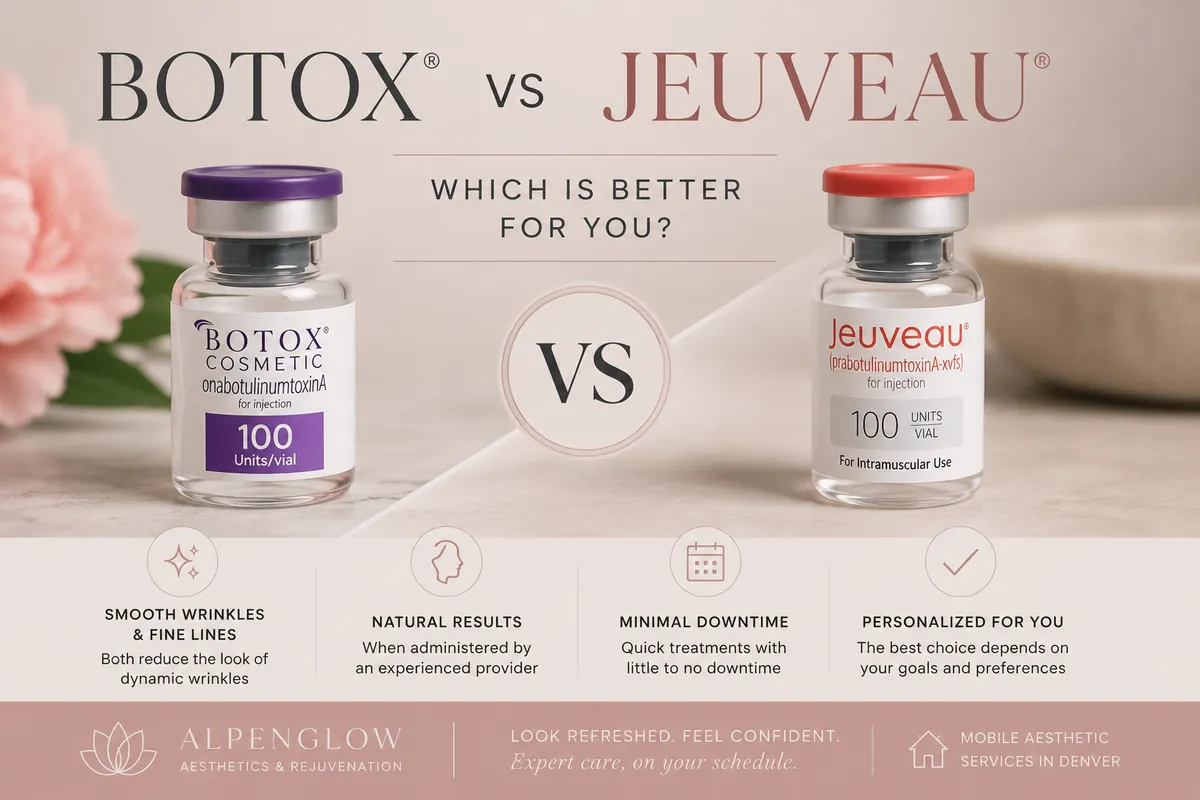
If you're exploring alternatives to Botox, such as Jeuveau, you might wonder if it also uses units. The answer is yes! Jeuveau, like Botox, is measured in units, and each has its unique dosing recommendations. Our Botox vs Jeuveau comparison breaks down the differences, and a consultation with your provider can help determine which treatment is best for you.
How a Consultation Determines Your Treatment Plan
The best way to ascertain how many units of Botox you need is through an in-depth consultation with a qualified professional. During the consultation, you can expect:
- Assessment of Facial Structure: A provider will examine your facial muscles and skin to determine the ideal dosage.
- Discussion of Goals: You'll discuss your aesthetic goals and what you want to achieve with Botox.
- Customized Treatment Plan: Based on the assessment and discussion, a tailored plan will be created just for you.
Getting Botox at Home in Denver
If you're considering Botox but would prefer the convenience of receiving treatment at home, many providers in Denver now offer mobile services. This allows you to enjoy the benefits of Botox without the hassle of traveling to a clinic.
Key Benefits of Mobile Botox:
- Convenience: Get treated in the comfort of your home.
- Personalized Service: Enjoy one-on-one attention from a qualified provider.
- Flexible Timing: Schedule your treatment at a time that suits you.
Learn more about mobile Botox in Denver and mobile Botox in Boulder, or see exactly how a mobile appointment works from start to finish.
In summary, understanding how many units of Botox you need involves considering various factors like treatment areas, individual muscle strength, and desired outcomes. Always consult with a qualified provider to ensure your treatment is safe and effective.